

The Unseen Angle The Left-Handed Edge in Modern Combat
Exploring the Science, Psychology, and Subtle Chaos Behind the Southpaw Advantage
The Rarity That Shapes the Battlefield
In the world of combat sports, few things are as intriguing and disruptive as the southpaw stance. Left-handed fighters represent a small minority in most fighting disciplines, yet their presence is often enough to dismantle even the most seasoned opponents. This rarity creates confusion, not because southpaws are inherently superior, but because their angles, timing, and rhythm challenge the expectations that dominate conventional fighting patterns. When two fighters square off, both assume an unconscious familiarity with how exchanges flow, but the moment a southpaw steps in, that familiarity dissolves.
Most fighters grow up training against orthodox opponents. Every drill, every combination, and every defensive movement becomes tuned to counter right-handed attacks. The jab comes from one side, the power hand from the other, and the body naturally adjusts to that rhythm. When faced with a left-hander, this internal map of reactions no longer applies. Punches and kicks come from mirrored directions, guard positions clash awkwardly, and the entire flow of distance control changes. The result is a mental and physical disruption that gives southpaws a built-in strategic edge before a single strike is thrown.
The Geometry of Advantage
At its core, fighting is geometry in motion. Every strike, block, and pivot creates lines of attack and defense. In a battle between two orthodox fighters, these lines mirror one another, forming predictable angles. However, when an orthodox fighter faces a southpaw, the geometry changes completely. The lead feet now point toward one another, creating a constant battle for outside foot positioning. Whoever wins that battle dictates the angle of attack. A southpaw who steps outside the opponent’s lead foot aligns their power hand directly with the opponent’s centerline, opening a clear path for crosses and kicks that are difficult to defend.
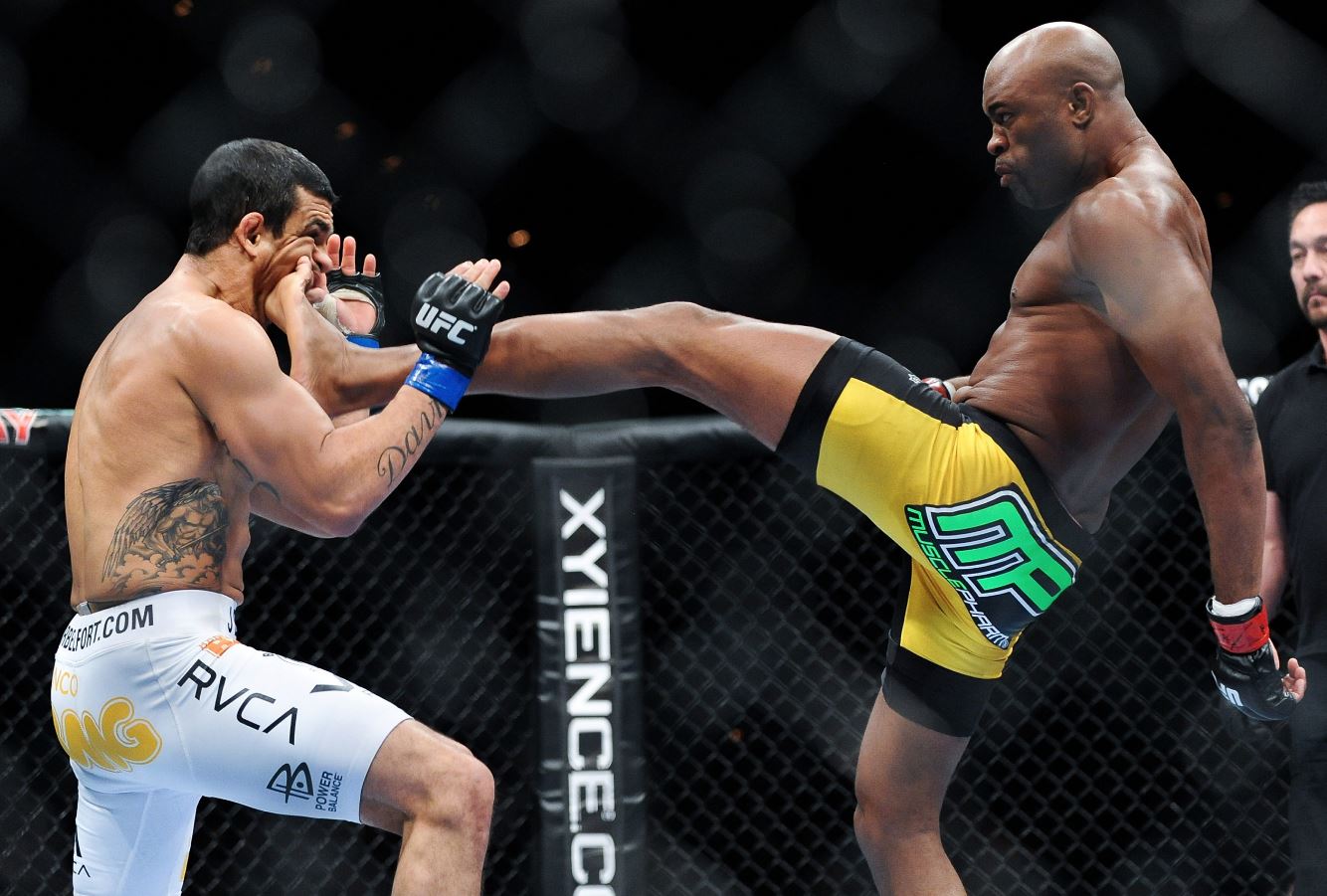
This geometric disruption extends beyond punching lanes. The southpaw stance reverses the visual field, forcing orthodox fighters to defend from angles they rarely see. The jab, normally a defensive tool to maintain distance, becomes an offensive weapon for the southpaw, threading through openings that orthodox fighters struggle to close. Similarly, the left kick, thrown to the body or head, lands against the unguarded side of most orthodox stances. It is not simply that southpaws hit harder or faster. Their attacks travel along paths that opponents are unaccustomed to intercepting. The confusion of geometry becomes a weapon in itself.
The Psychological Disruption of the Mirror Image
Fighting a southpaw is as much a mental challenge as it is a physical one. The human brain thrives on pattern recognition, and when those patterns are disrupted, hesitation follows. Even elite fighters who have trained for years find themselves second-guessing movement when facing a left-handed opponent. The jab comes from the wrong direction. The power shots feel inverted. The defensive reflexes that normally work with precision now lag by fractions of a second. In combat, those fractions often decide outcomes.
The psychological strain deepens with every missed opportunity. Fighters describe the frustration of constantly being a step behind, of throwing combinations that land just short, or defending attacks that seem to appear from nowhere. The southpaw’s rhythm feels alien. It forces opponents to think rather than react, and in fighting, thought is slower than instinct. The mental fatigue that results from this adjustment process can be just as draining as physical exertion. Over time, frustration leads to mistakes, and those mistakes are exactly what southpaws are trained to exploit.
Historical Legends Who Redefined the Southpaw Style
The history of combat sports is filled with left-handed warriors who turned their unconventional stance into a legacy. In boxing, legends like Marvin Hagler, Pernell Whitaker, and Manny Pacquiao used the southpaw stance to dismantle champions who struggled to adapt. Hagler combined the stance with relentless pressure, breaking orthodox fighters mentally before breaking them physically. Whitaker’s defensive mastery made opponents swing at shadows, while Pacquiao’s speed and unpredictable angles overwhelmed even the most tactical minds of his generation. Their success proved that the southpaw stance is not a gimmick, but a philosophy of motion rooted in precision and adaptability.
In mixed martial arts, the list continues. Fighters like Anderson Silva, Conor McGregor, and Lyoto Machida built empires on the foundations of southpaw strategy. Silva’s counterstriking relied on the manipulation of angles that only a southpaw could exploit. McGregor weaponized his left cross into one of the most feared punches in MMA history, using distance control and deceptive timing to dominate orthodox opponents. Machida, with his karate background, fused traditional movement with modern southpaw tactics, showing that the stance is as much about psychological warfare as physical technique. Each of these fighters carried the same message: the southpaw is not simply different, it is disruptive by design.
Training to Face the Unfamiliar
For orthodox fighters, preparing for a southpaw opponent requires unlearning years of instinctive behavior. Coaches often bring in left-handed sparring partners to simulate the angles and distance that southpaws create. However, these sessions rarely capture the full complexity of facing a true southpaw specialist. The adjustments go beyond physical positioning. Fighters must learn to change the timing of their jab, the arc of their hooks, and even the placement of their feet. The outside foot battle becomes critical. Lose it, and the entire stance collapses into defensive retreat. Win it, and the playing field levels once again.
Drills designed for anti-southpaw strategies often emphasize repetition until new muscle memory replaces old habits. Fighters are taught to circle away from the southpaw’s power hand, to keep their lead foot outside, and to throw straight punches that disrupt rhythm. Yet, even with preparation, the unpredictability remains. No two southpaws fight the same way. Some are pressure fighters who march forward behind straight lefts, while others are counterpunchers who lure opponents into traps. This diversity of approach makes them even harder to prepare for. The element of surprise remains their greatest weapon.
The Southpaw’s Strategic Toolbox
Southpaws possess unique tools that amplify their effectiveness against orthodox fighters. The lead right hook, often underused in orthodox matchups, becomes a powerful weapon for left-handers. It sneaks around the guard and sets up the straight left that follows. Their rear roundhouse kick, aimed at the opponent’s liver, lands with devastating accuracy because most fighters are unaccustomed to defending attacks from that direction. Even defensively, southpaws have advantages. The positioning of their lead hand allows for parries and counters that flow naturally with the rhythm of their stance.
Footwork plays a defining role as well. Southpaws use lateral movement to create openings and misdirection. A quick pivot to the right exposes the opponent’s blind side, creating opportunities for strikes that land unseen. The constant motion forces the opponent to reset, breaking their offensive rhythm. Combined with timing and patience, the southpaw’s strategy becomes a game of angles rather than aggression. Every exchange becomes a puzzle, one that the orthodox fighter must solve while under pressure. This is why even the best technicians often look awkward against a seasoned southpaw. The battle is fought on unfamiliar terrain, both mentally and physically.
The Hidden Weaknesses of the Southpaw
Despite their advantages, southpaws are not invincible. Their rarity means they too often train against orthodox opponents, leaving them vulnerable to other left-handers. When two southpaws meet, the geometric advantage disappears. The lines of attack become familiar again, and the fight returns to a more even playing field. Additionally, because their power hand leads from the rear, they sometimes struggle against opponents who pressure aggressively and cut off angles effectively. Fighters who refuse to be confused, who step inside and smother the left hand, can neutralize much of the southpaw’s danger.
Another challenge lies in adaptation. Many southpaws rely heavily on their stance’s inherent advantages. When those advantages are neutralized, their confidence can waver. The very unpredictability that defines their style can also work against them if forced into predictable patterns. To remain dominant, left-handed fighters must evolve constantly, blending traditional southpaw mechanics with universal fundamentals. The best left-handers understand that confusion is temporary, but precision endures. Once the mystery of the stance fades, only technique remains.
The Legacy of the Left Hand
The southpaw stance is more than a mirror image of orthodoxy. It represents the art of adaptation, the science of disruption, and the psychology of surprise. Every left-handed fighter carries a legacy of unpredictability, reminding the world that combat is not about symmetry, but about creativity. From boxing rings to MMA cages, the southpaw continues to shape how fighters think, train, and evolve. Their presence forces the sport to progress, to reconsider what angles mean and how patterns are broken.
In the end, the true power of the southpaw lies not in rarity, but in mastery. A left-handed fighter who understands the principles behind their stance transforms unpredictability into control. They redefine timing, geometry, and rhythm with every exchange. For their opponents, the fight becomes a lesson in adaptation. For the southpaw, it is a celebration of perspective, proving that sometimes the greatest advantage in combat is simply the courage to see the world from the other side.